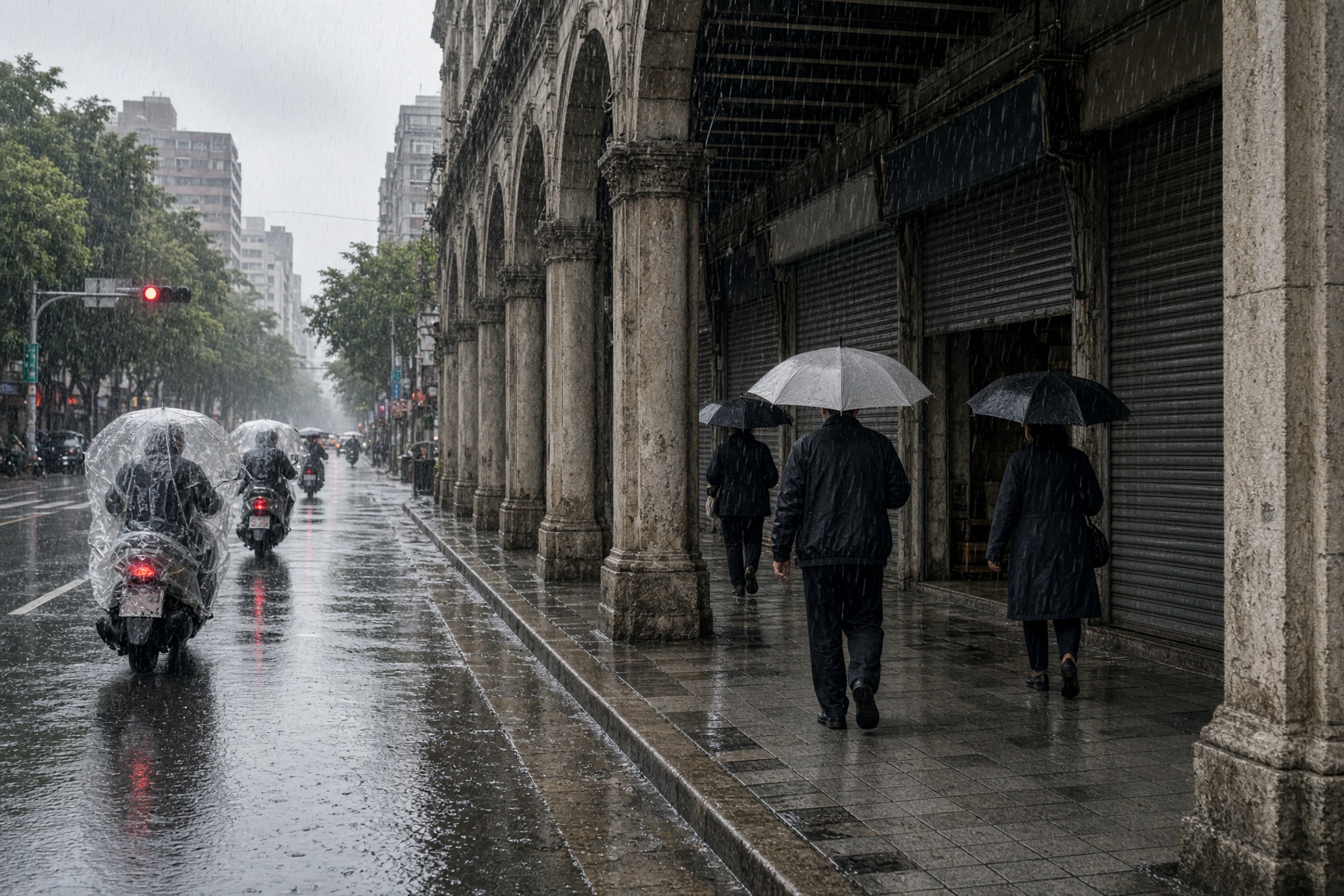
Taiwan’s typhoon language is precise, which is a gift, and it is also in Chinese first, which is why so many English-speakers treat the alerts as weather theater. They are not. They are labor-law adjacent.
Work and school closures are called by city and county governments, usually the night before or before dawn, based on the Central Weather Administration’s warnings. Taipei, New Taipei, and Keelung often move together; Taoyuan sometimes does not. If your office is in one city and your child’s school is in another, you can have a mismatched day. This is normal. It is also why you should read the city, not the national headline.
A sea warning means ships. A land warning means you. Once a land warning is up, the question is not “will it rain” — it will — but whether the city has called a day off. If it has, you stay home, you do not improvise a coastal drive to “see the waves,” and you check the gas in the scooter only if you need it.
For apartments: tape is for windows that already rattle. Balcony furniture comes inside. The tiled floors of older buildings get wet if the wind is from the wrong direction; a towel at the balcony track is not folklore. Convenience stores stay open longer than you think. ATMs do not.
We keep a living note on this — see Living — because the first typhoon you wait out in a new city is the one that teaches you the building. After that, it is just weather.