On Friday, September 3, 1954, the People’s Liberation Army opened a heavy bombardment of Kinmen. Two American advisers were killed on Shuitou wharf in the first barrage. The shelling spread to Matsu and the Dachen islands. By the following spring Washington had signed a mutual defense treaty with Taipei and Congress had given Eisenhower a Formosa Resolution — language that still sits, in different clothes, under every conversation about “will they / won’t they.”
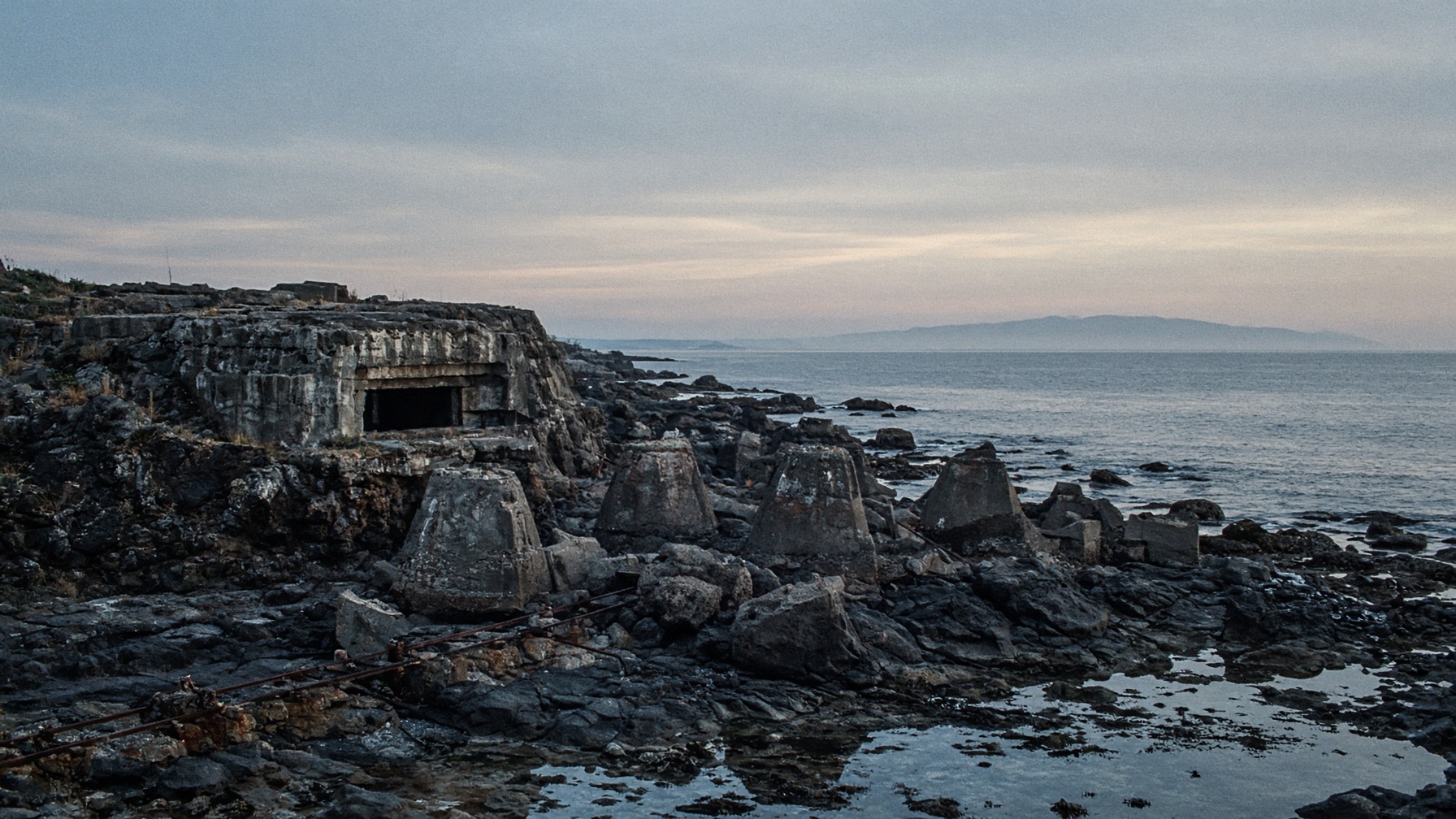
The useful fact, if you live here in 2026, is not the treaty. It is the geography. Kinmen is a county of Taiwan, 187 kilometers west of the main island and a few kilometers from Xiamen. You can book a ticket, eat sorghum liquor chicken, and walk past concrete casemates with grass in the firing slits. The bunkers are not a metaphor. They are a civic landscape, the way trash night is a civic landscape.
What began that Friday was the first of the Strait crises people still number. It did not become a landing. It did become a habit: the offshore islands as a pressure valve, the main island as the thing that must not be tested. If you have only been as far west as the Tamsui river mouth, Kinmen is the place that makes the map stop being a weather app.
Go if you can. The 823 Museum and the old military villages are the assigned reading. The quieter assignment is the coast path in ordinary weather, when the mainland is a haze and the speakers in the villages play a radio station from the other shore. The crisis is in the textbooks. The island is a place you can miss the last flight home from.