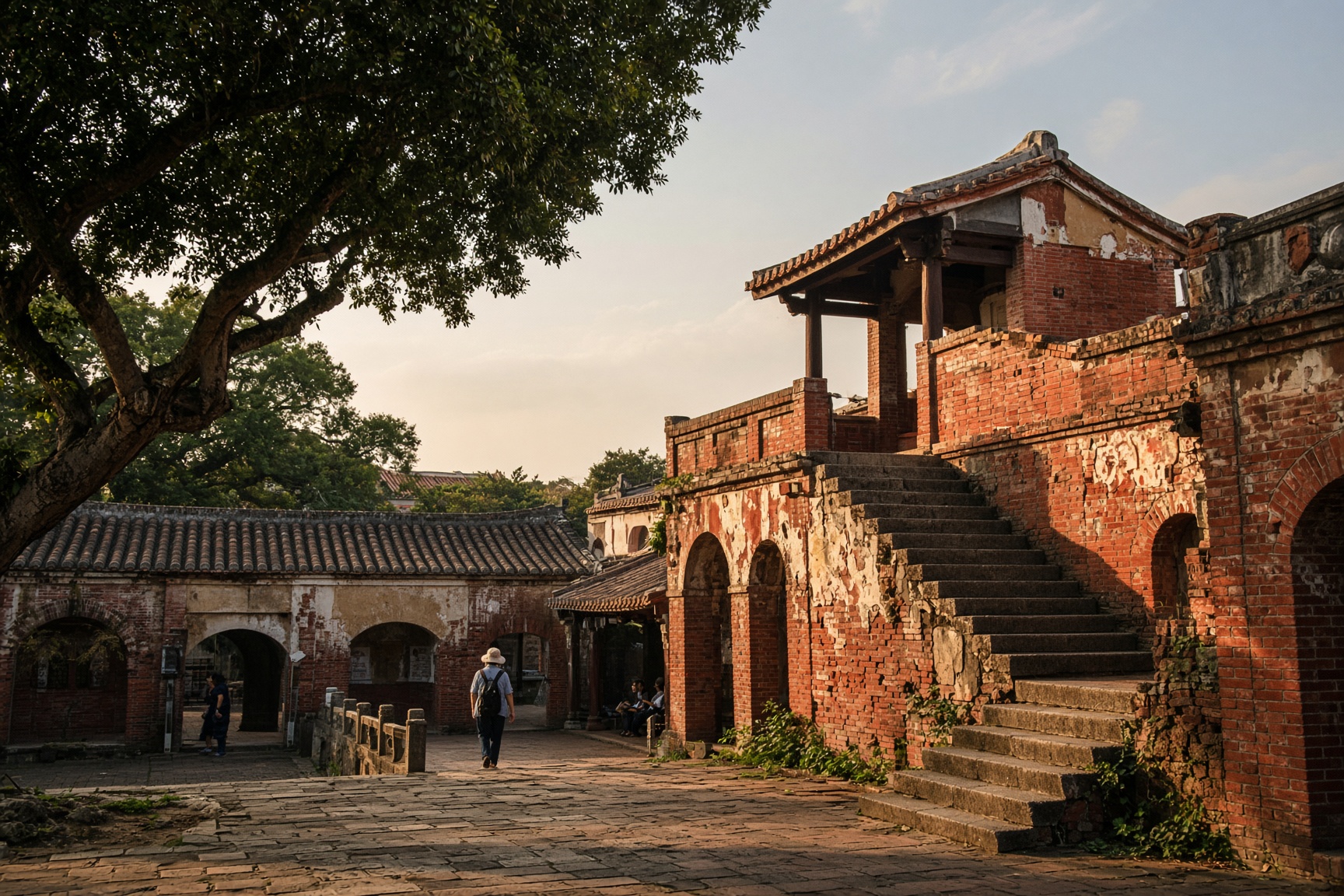
On the night of 7 September 1652, Chinese farmers under Guo Huaiyi (郭懷一) came at the Dutch settlement of Saccam — present-day Tainan — with bamboo spears and harvest knives. They had meant to wait for Mid-Autumn. The plan leaked. They went early. Fort Provintia, then a bamboo palisade, was the first target.
The Dutch East India Company taxed Chinese settlers and not the indigenous villages, and collected a head tax with the usual colonial petty corruption. Sugar had been a bad year. Guo was a farmer and a headman, known to the Company as Gouqua Faij-it. The force may have been a quarter of the Han population then on the island. Taiwan in Time is the readable English account; Tonio Andrade’s How Taiwan Became Chinese is the one historians still argue with.
On the 8th, 120 Dutch musketeers broke the siege. On the 11th — this Friday’s date — Company soldiers and indigenous allies met the rebels just north of Tayouan and ended it. The muskets decided the field. The killing did not stop at the field. Something like four thousand Chinese died in those days, including people hiding in the cane. Eight Dutchmen died. Guo was shot; his head went on a spike at Zeelandia.
You can walk the site as Chikan Tower on a Tainan afternoon and eat before the HSR home. The brick fort is later; the Company put up real walls after this week. The useful fact is not a moral. It is a calendar: this island’s Chinese settlement was already large enough, in 1652, to field an army and to lose one. If you are in Tainan this weekend, that is the assigned walk. Read the captions. Eat. The cane fields are gone. The date is not.